Disclaimer: Trading is highly speculative and carries a high level of risk. The vast majority of day traders lose money. The information provided in this guide is for educational purposes only and does not constitute financial or investment advice. You should be aware of all the risks associated with trading and consult with an independent financial advisor before making any decisions.
Trading is a field that promises financial independence and the freedom to control your time. It’s a career path often romanticized in movies and online forums, but the reality is far more demanding. Success in trading is not about luck, gut feelings, or finding a secret formula. It’s about mastering a set of fundamental principles that are as old as the markets themselves: discipline, risk management, and a robust, well-defined strategy.
Unfortunately, most beginners jump into trading without a clear roadmap, lured by the promise of quick wealth. This is a dangerous path that almost always leads to significant financial losses. The objective of this comprehensive guide is to provide you with the foundational knowledge you need to avoid those common pitfalls. We will break down the true fundamentals of trading in a way that is simple, practical, and, most importantly, actionable. By the time you finish this guide, you will have a clear understanding of the mindset, the process, and the tools you need to build a disciplined approach to the markets.
We will also use real-world examples from historical market data to illustrate how these fundamentals work in practice. The goal is to show you that with a proper process, you can find success, not by chasing profits, but by managing risk and sticking to your plan.
The Mindset of a Successful Trader: Process Over Profit
Before you place a single trade, you must first master your mindset. The biggest mistake a beginner can make is to focus exclusively on the money. Money is merely the scoreboard. The real game is about executing a repeatable, profitable process. Think of it like a professional athlete: a basketball player doesn’t focus on scoring points; they focus on practicing their shot, running the plays correctly, and staying in peak physical condition. The points—the profit—come naturally as a byproduct of this discipline.
The journey of a trader is a test of your mental resilience. You will be wrong, and you will have losing trades. This is an unavoidable part of the game. A profitable trader is not someone who wins every trade, but rather someone who has a system that allows them to make money even when they are “wrong” more often than they are right.
A Real-World Example: Risk-to-Reward Ratio
A cornerstone of a profitable process is the risk-to-reward ratio. This is a simple calculation that tells you how much you are risking for every dollar you expect to make. A common ratio is 1:3, meaning for every $1 you risk, you aim to make $3 in profit.
Let’s apply this to a hypothetical trader, Alex, who risks $100 per trade and targets a 1:3 risk-to-reward ratio. In a series of 10 trades, Alex is only right on 4 of them—a 40% win rate.
- Losing Trades (6): 6 trades x $100 loss = -$600
- Winning Trades (4): 4 trades x $300 profit = +$1,200
- Net Profit: +$600
Even though Alex was “wrong” 60% of the time, he still finished with a significant profit because he had a process that prioritized his risk-to-reward ratio. This is the difference between a gambler and a professional.
Your Roadmap to Trading Success
Most beginners fall into the trap of “strategy hopping.” They watch a YouTube video on one strategy, try it for a week, lose a few trades, and then abandon it for the next “secret system.” This is a recipe for frustration and failure. Instead, you need a clear, well-defined roadmap.
- Learn the Fundamentals: Before you even think about a strategy, you must understand the language of the markets. This includes concepts like market structure, candlesticks, and support and resistance.
- Pick One Mechanical Strategy: A mechanical strategy is one with a clear set of rules that leaves no room for guesswork. It dictates your entry, exit, and stop-loss points.
- Backtest and Forward-Test: This is the most crucial step. You must prove to yourself that your strategy works.
- Backtesting involves applying your strategy to historical data to see how it would have performed. You need to do this for at least 100 trades to get a statistically significant sample size.
- Forward-testing (also known as “paper trading”) is practicing your strategy in a live market environment using fake money. This allows you to feel the emotional pressure without risking your capital.
- Start Small with Real Money: Once your backtesting and paper trading show consistent profitability, you can transition to live trading. Start with a very small amount of money—an amount you are emotionally prepared to lose. This will train you to handle the psychological pressure of a real trade.
- Scale Gradually: As your account grows and you prove to yourself that you can follow your rules, you can slowly increase your position size.
This roadmap is designed to build confidence in your strategy, which is the foundation of discipline.
Step 3: Understanding Market Fundamentals
At its core, trading is about one simple principle: supply and demand. When there are more buyers than sellers, the price goes up. When there are more sellers than buyers, the price goes down. The tools and charts you use as a trader are simply a visual representation of this dynamic.
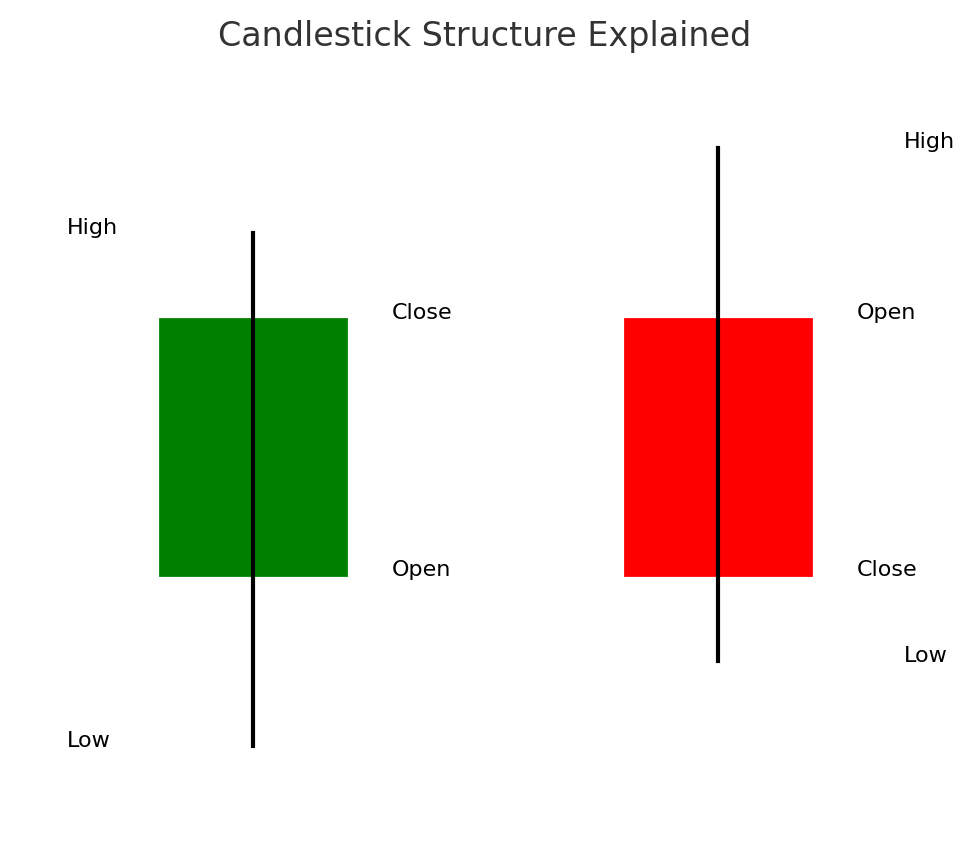
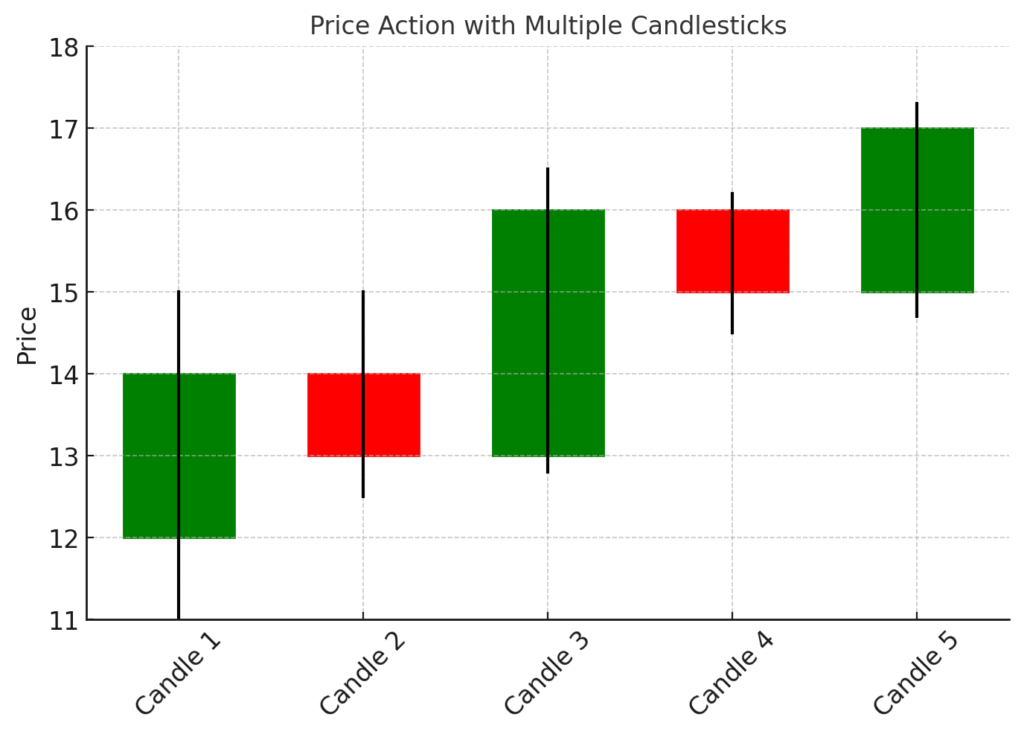
- Candlesticks: Candlesticks tell you the price action within a specific time period. A green candle means the price closed higher than it opened, and a red candle means the price closed lower. The wicks (the thin lines at the top and bottom) show the highest and lowest prices reached during that period.
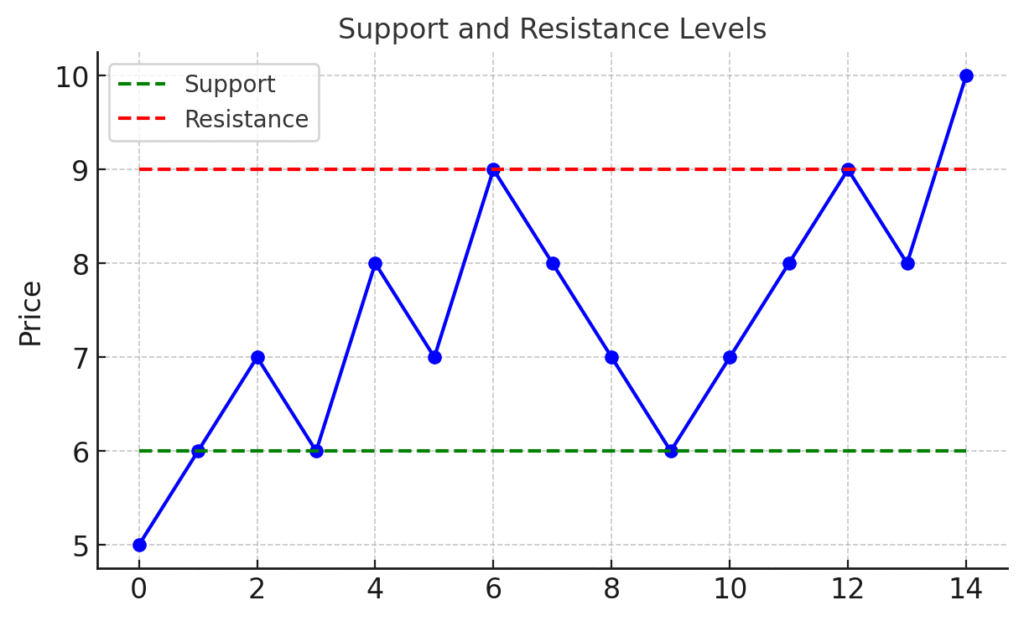
- Support Levels: A support level is a price point where a stock has historically stopped falling and started to rise. It’s a “floor” where buyers tend to step in and prevent the price from going lower.
- Resistance Levels: A resistance level is a price point where a stock has historically stopped rising and started to fall. It’s a “ceiling” where sellers tend to take profits and stop the price from going higher.
A Real-World Example: Support During a Crisis
Let’s look at the S&P 500 (SPY) during the COVID-19 market crash in March 2020. As the market plummeted, it fell from a high of around $338 to a low of approximately $218. However, traders who understood technical analysis noticed that the price was nearing a significant support level from 2018. When the price reached this level, a massive influx of buyers stepped in, and the market began to recover. The ability to identify this “floor” was a critical skill that allowed some traders to take advantage of a buying opportunity while others panicked.
Step 4: Mastering One Strategy
The key to success is to find one simple, mechanical strategy and master it completely. This is the difference between a professional and an amateur. A professional doesn’t have 100 different strategies; they have one that they can execute in their sleep.
A Simple Breakout Strategy Example
Let’s break down a very common and effective strategy: the pre-market breakout.
- Rule 1: Identify the Range: Mark the high and low of the first 30 minutes of trading. This creates a “box” that contains the early price action.
- Rule 2: The Breakout: Wait for the price to break either above the high or below the low of that box.
- Rule 3: The Entry: Enter a trade in the direction of the breakout.
- Rule 4: The Stop-Loss: Immediately place a stop-loss order just inside the opposite end of the box to protect your capital.
- Rule 5: The Take-Profit: Use a 1:2 or 1:3 risk-to-reward ratio for your take-profit.
This strategy is simple, has clear rules, and can be applied consistently across different stocks and timeframes. It removes the emotional decision-making that leads to losses.
Step 5: Trading Psychology: The Hidden Killer
The biggest challenge in trading is not the market; it’s you. Psychology is the hidden killer of most trading accounts. Greed, fear, and impatience can lead to irrational decisions that override your carefully constructed strategy.
- Fear of Missing Out (FOMO): This happens when you see a stock or cryptocurrency soaring in value and you jump in without a plan, afraid that you’ll miss out on the profits.
- Revenge Trading: After a losing trade, your emotions may tell you to enter another trade immediately, risking a larger amount to “get your money back.” This is a guaranteed way to accelerate your losses.
- Overconfidence: When you have a few winning trades in a row, you may start to think you can’t lose and take on more risk than your strategy allows.
A Real-World Example: The GameStop Mania
In early 2021, GameStop (GME) stock soared from under $20 to nearly $500 in a matter of weeks. Traders who engaged in FOMO bought at the top, only to watch the price plummet, losing significant capital. The ones who succeeded were those who had a clear plan, were disciplined enough to stick to their rules, and were not swayed by the hype.
Step 6: Transitioning to Live Trading Safely
Once you have backtested and paper-traded your strategy with consistent results, it’s time to transition to live trading. This is where your psychology will be truly tested.
- Start with Minimal Capital: Do not use your life savings. Start with a very small amount, even just $100. This is not about making money; it’s about training your mind to handle the emotional pressure of a real trade.
- Journal Everything: A trading journal is your most powerful tool. It is where you record every trade you take, regardless of whether it’s a win or a loss. You should include:
- The Setup: What was the reason you entered?
- The Plan: What was your stop-loss and take-profit?
- The Outcome: What was the result of the trade?
- Your Emotions: How did you feel during the trade?
- Lessons Learned: What can you improve on?
Journaling transforms trading from a game of chance into a data-driven business. It allows you to identify your strengths, weaknesses, and any patterns in your mistakes.
Step 7: Avoiding the 5 Deadly Mistakes
A wise trader once said that a beginner’s job is not to make money but to avoid losing it. By sidestepping these five common mistakes, you dramatically increase your chances of survival.
- Strategy Hopping: As we’ve discussed, jumping from one system to another prevents you from ever mastering a single profitable approach.
- Inconsistent Position Sizing: Never risk more on a “gut feeling” or on a trade you are emotionally attached to. The same amount of risk should be applied to every single trade.
- Revenge Trading: Do not get angry and immediately enter another trade after a loss. Walk away from the computer, take a break, and come back with a clear mind.
- Obsessing Over Wins/Losses: A profitable trader doesn’t care about the outcome of a single trade. They only care about executing their process flawlessly. Focus on the rules, not the money.
- Not Journaling Trades: Without a journal, you are simply gambling. A journal is the only way to identify flaws in your system and improve your performance.
Real-World Trading Scenarios
To bring these principles to life, let’s look at a few examples of how they apply to real market data.
Scenario 1: The Power of Patience (Apple Stock)
Imagine a disciplined investor who, instead of day trading, decided to buy and hold Apple (AAPL) stock. In 2012, AAPL was trading around a split-adjusted price of $20 per share. By 2022, it had climbed to over $170. An amateur trader might have panicked and sold during a dip, but a disciplined trader who understood the company’s fundamentals and had a long-term plan was rewarded with a massive return. This illustrates that sometimes the best trading strategy is to do nothing and let time do the work for you.
Scenario 2: The Importance of a Stop-Loss (Tesla Stock)
In January 2020, Tesla (TSLA) stock experienced a massive, multi-day run. An amateur trader, seeing the rapid increase, might have bought in on a whim, hoping the trend would continue. They bought at a price of around $175. However, a disciplined trader would have had a stop-loss order in place at, for example, $160. Within a week, the stock plummeted to $120. The amateur trader who had no plan lost over 30% of their investment, while the disciplined trader had their loss automatically capped at a manageable 8.5%. This is the essence of risk management.
Scenario 3: The Cost of Emotional Trading (The 2008 Financial Crisis)
In 2008, as the global financial crisis unfolded, the S&P 500 lost over 50% of its value. Many investors, driven by fear, sold all their holdings at the absolute bottom of the market. They locked in massive losses and never got back in. An emotional decision cost them their wealth. If they had simply held on and remained disciplined, their portfolios would have recovered, and by 2013, they would have been back at their pre-crisis value. By 2023, they would have been up over 300%. This is the ultimate example of why a calm, process-driven mindset is more valuable than any “hot tip” or secret strategy.
Conclusion
The world of trading is not a get-rich-quick scheme. It is a demanding business that requires a commitment to learning, discipline, and emotional control. The fundamentals are not glamorous, and they will not make you a millionaire overnight. But by focusing on the process, you can transform trading from a game of chance into a skill you can master.
The three most important takeaways are:
- You must have a plan. Never enter a trade without a clear strategy for your entry, your stop-loss, and your take-profit.
- You must manage your risk. The number one job of a trader is to protect their capital.
- You must master your emotions. The markets are a reflection of human psychology, and the ability to detach yourself from your wins and losses is the ultimate key to success.
Remember, the best traders are not the ones with the most profitable trades; they are the ones who can survive to trade another day. If you treat trading like a business and commit to these fundamentals, you will put yourself in the rare group of traders who find long-term success.
FAQs About the Fundamentals of Trading
1. Can you really make a living trading?
Yes, it is possible, but it takes years of learning, discipline, and consistent risk management. It’s important to know that most day traders lose money and fail to become profitable.
2. How much money do I need to start trading?
You can start with as little as $25 on some platforms, but realistically, $500–$1,000 is a good starting point for practice with minimal risk.
3. Is day trading better than long-term investing?
Day trading can produce faster results, but it carries a much higher risk of capital loss. Long-term investing is more stable and is generally the recommended path for most people to build long-term wealth. Many successful traders do both.
4. How long does it take to become profitable?
It depends on the individual. Some people become consistently profitable in 6–12 months, while others need years. The faster you build discipline and stick to one strategy, the sooner you’ll see results.
5. What is the number one rule of trading? Risk management.
Never risk more than you can afford to lose, and always prioritize protecting your capital above all else.